
New Collection
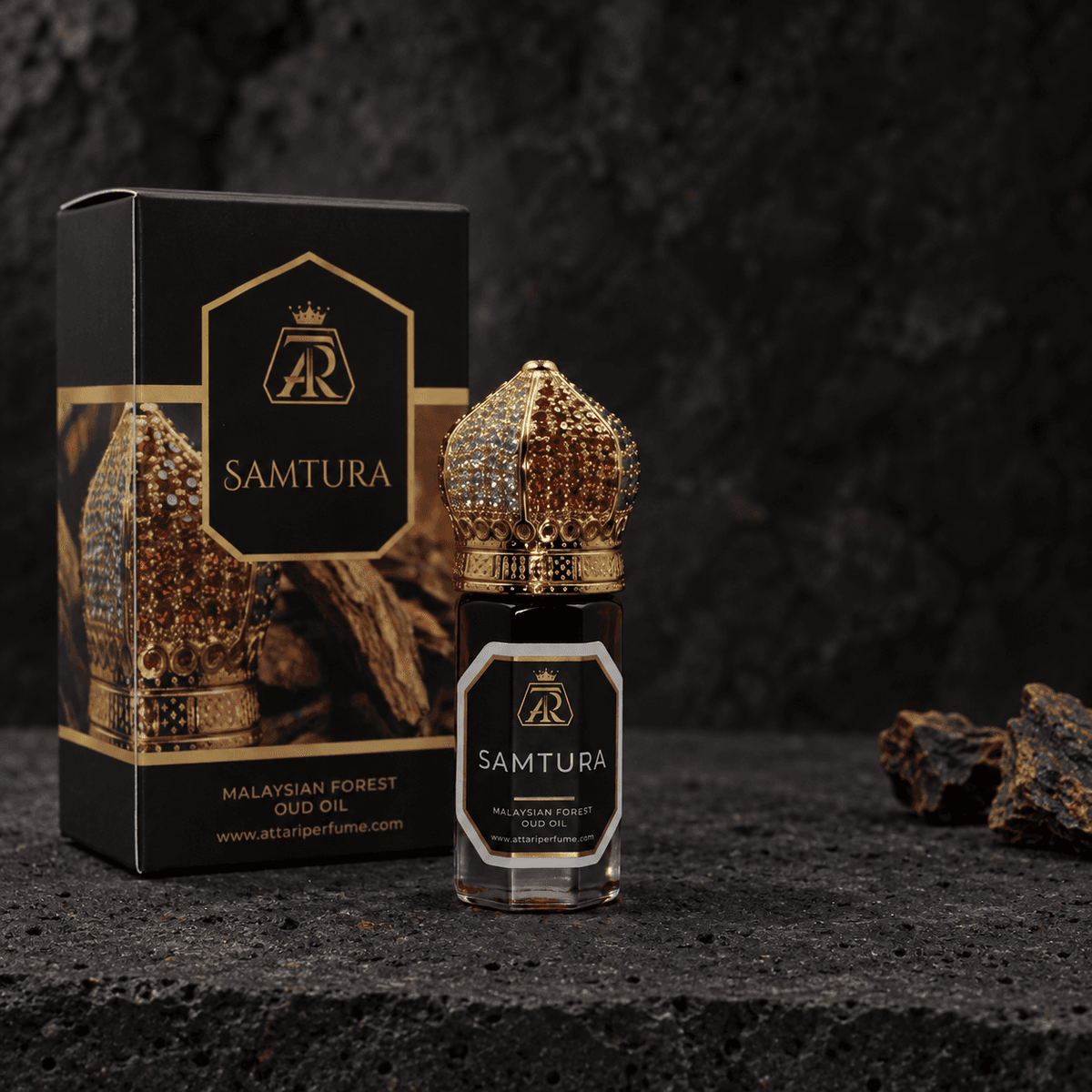
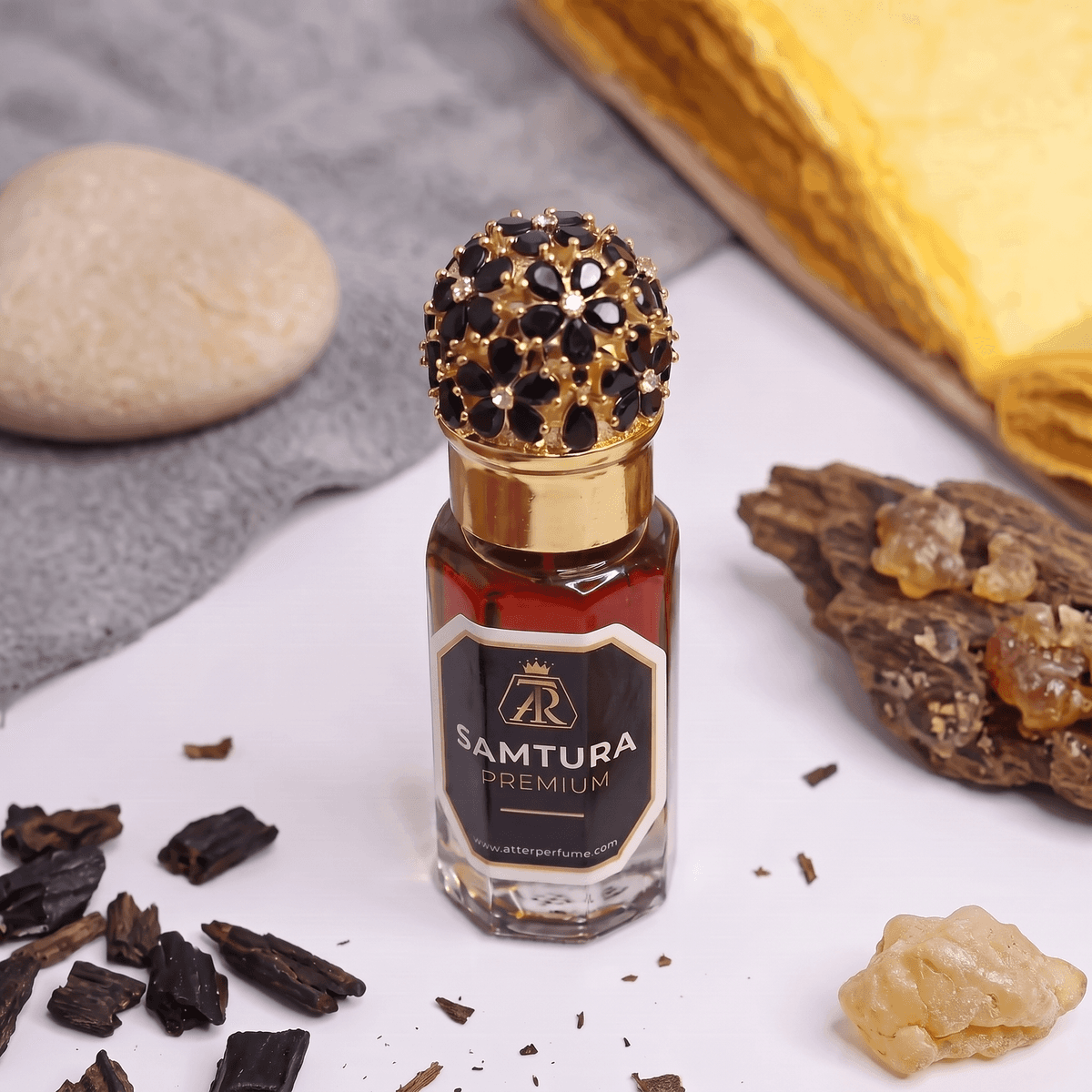
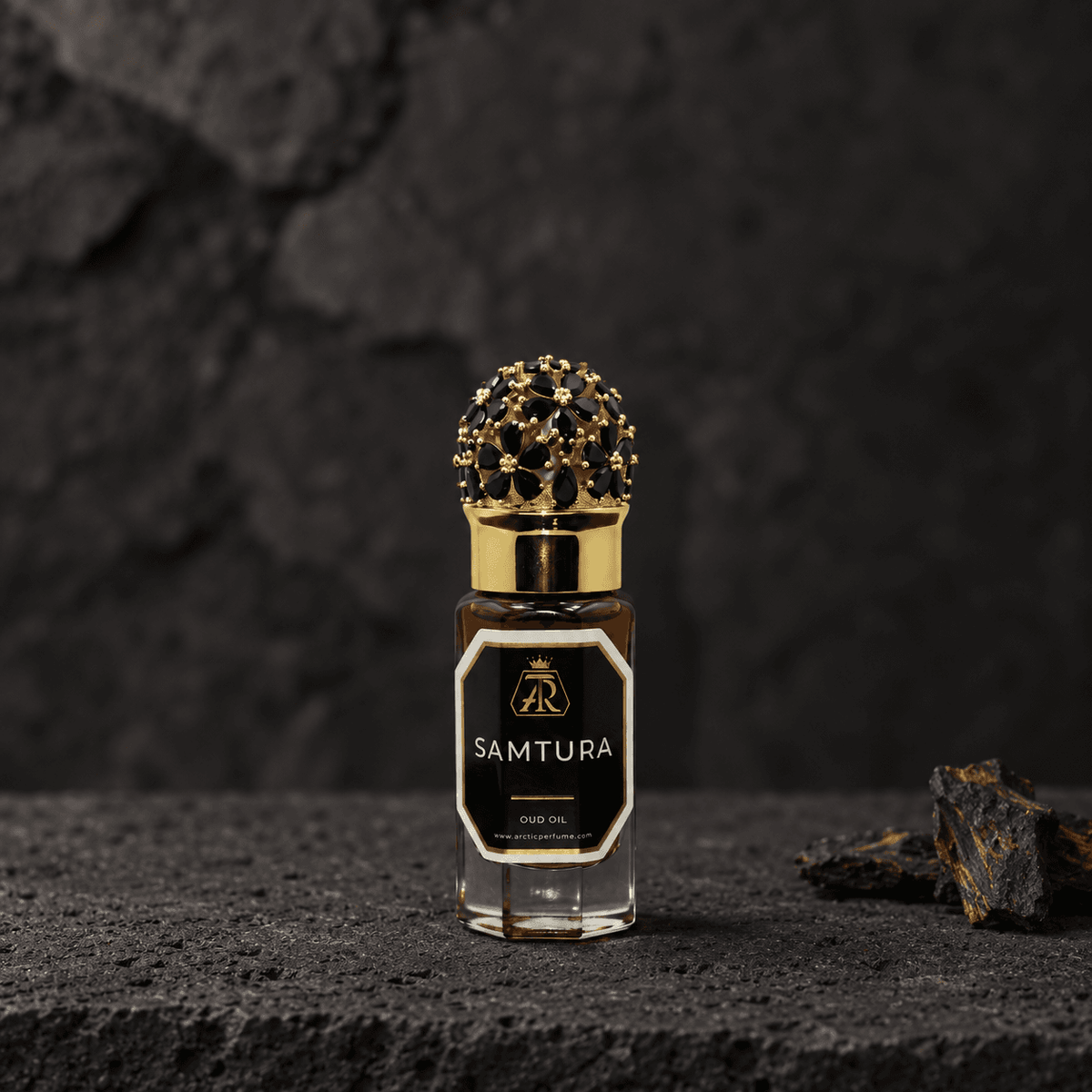
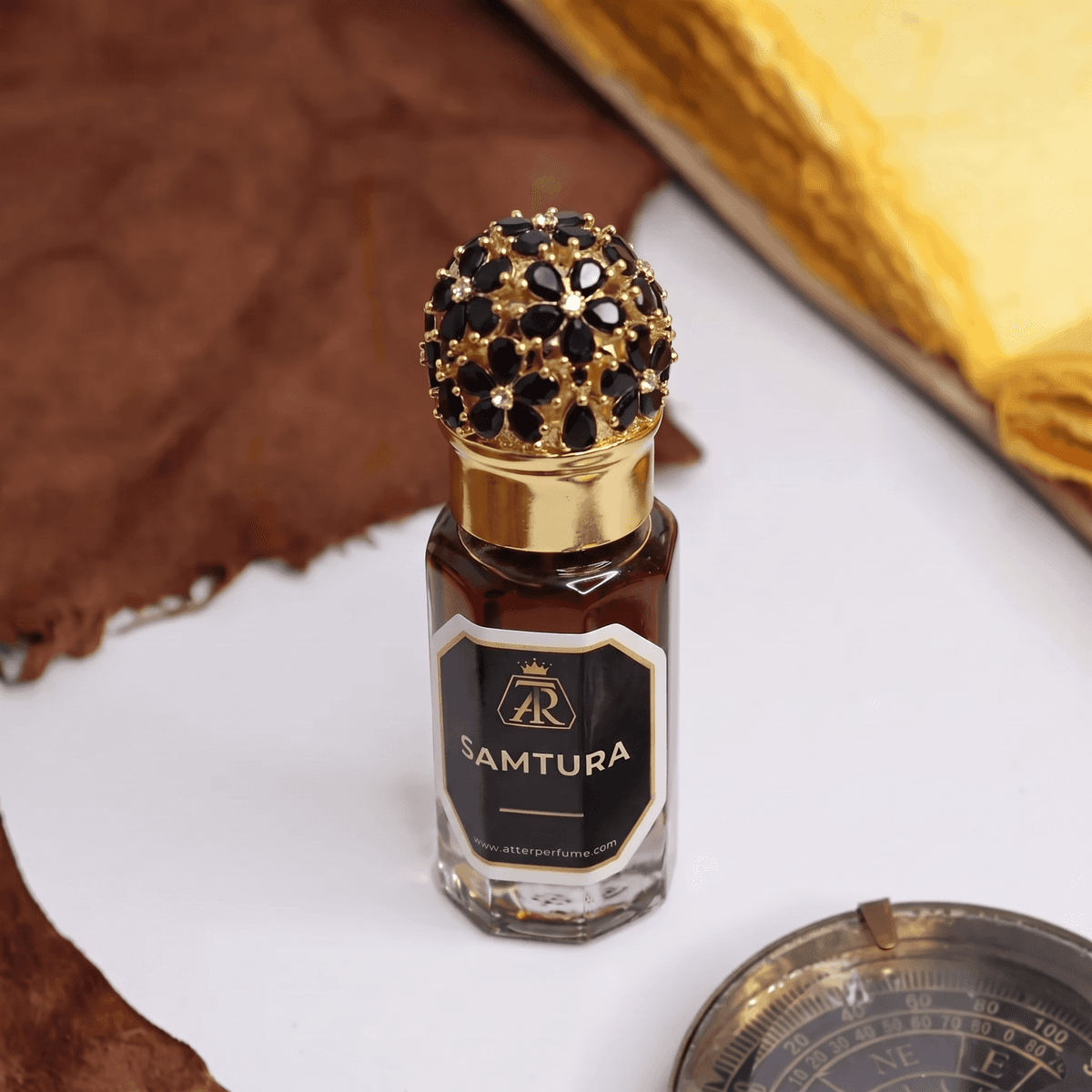
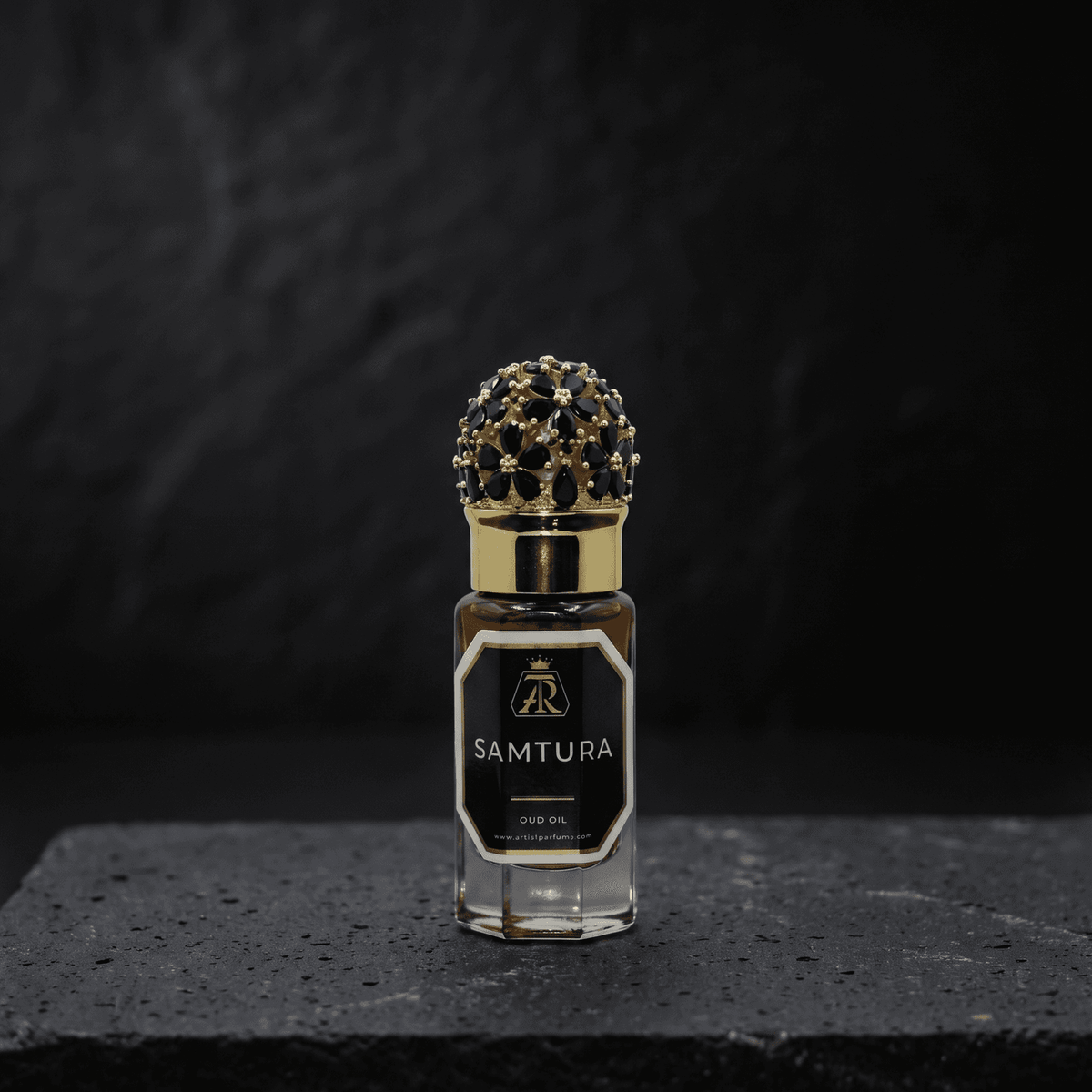
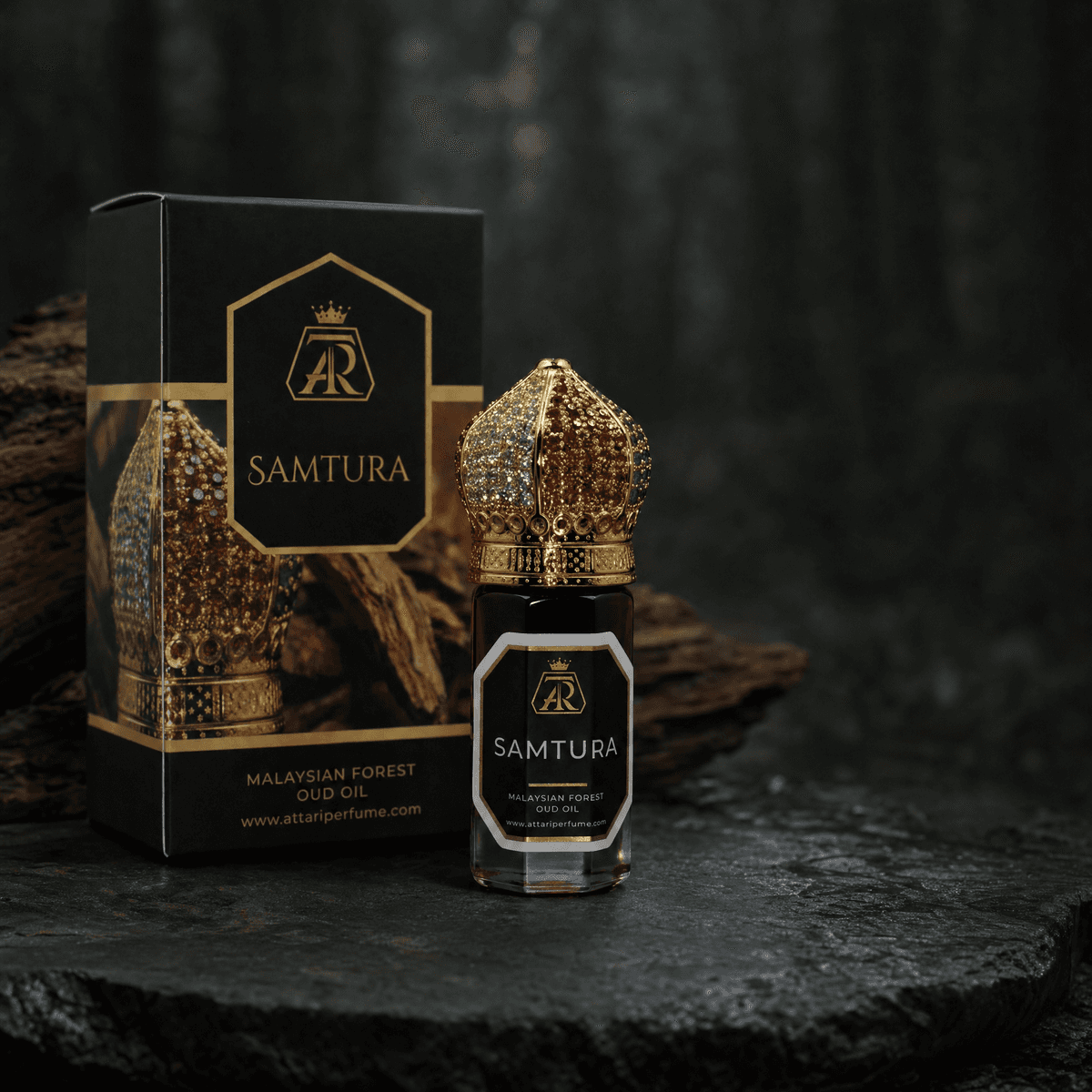
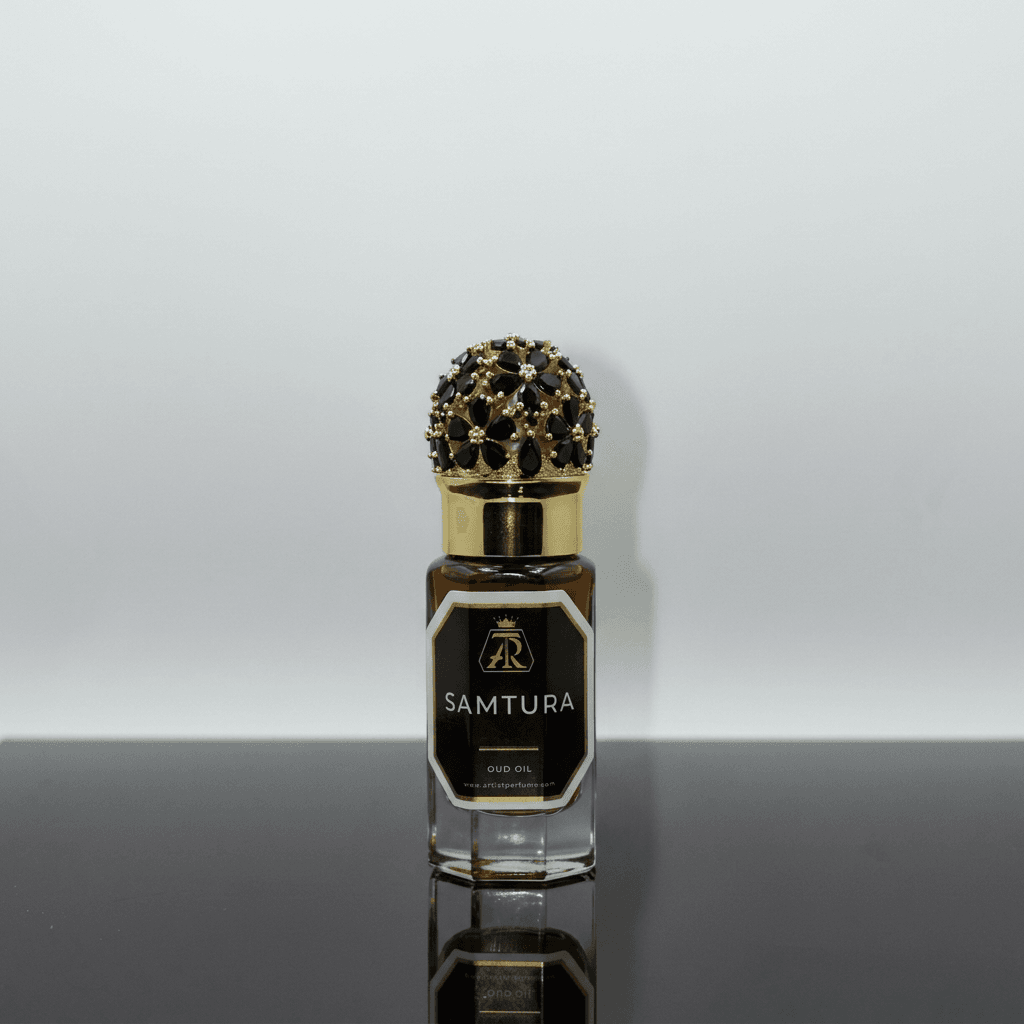
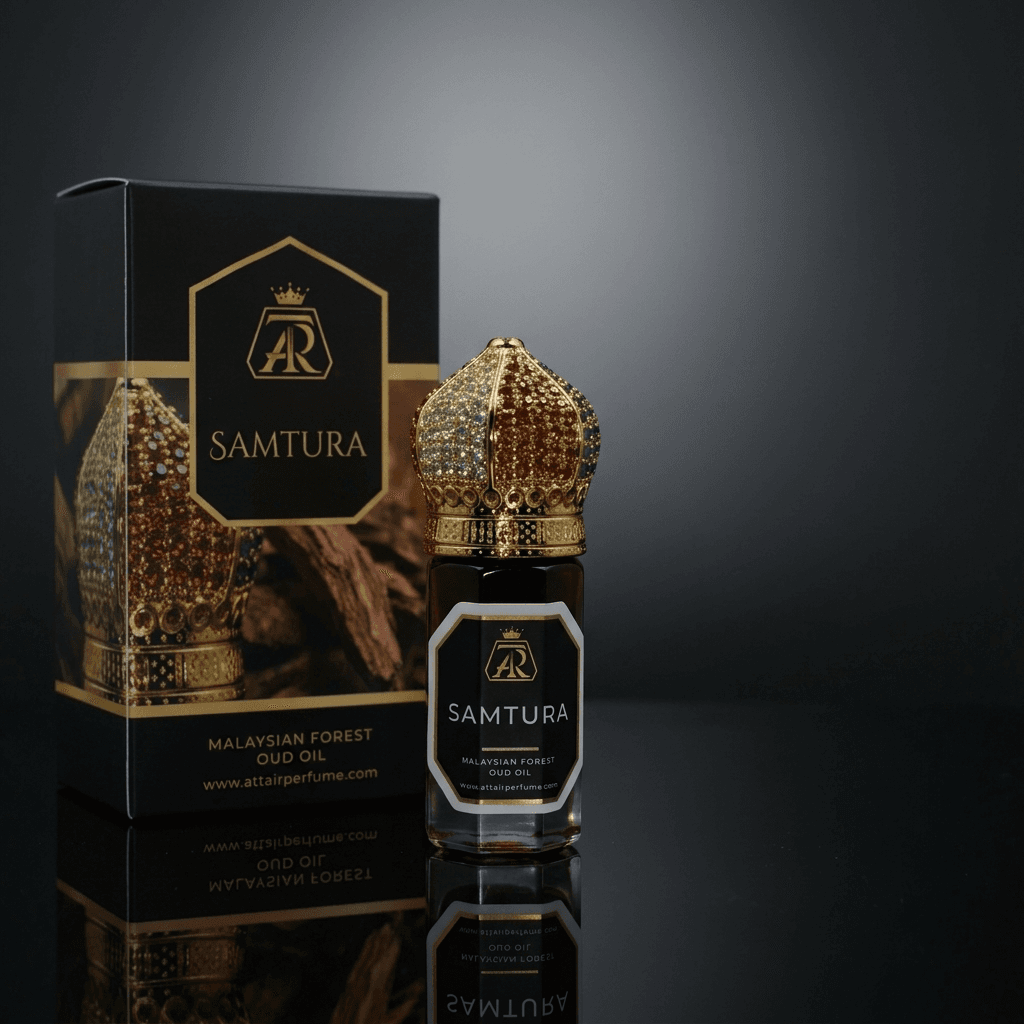
Samtura
Violet and grape, bright at the surface. Stone and resin underneath. Samtura is two fragrances sharing one bottle.
- 100% pure oilNo alcohol, no synthetics, no dilution
- Sealed by handAuthenticity guaranteed by our house
- Secure checkoutEncrypted payment through Shopify
Pairs well with
Samtura
The full story
Samtura
Purple Light, Cool Air
Samtura is an oud oil that does not behave the way many people expect oud to behave. Where the word usually suggests smoke, leather and shadow, this one begins in colour. The first impression is purple: violet and dark grape, lifted by a coolness that feels almost sparkling, as though the air had just been rinsed.
That contrast is the whole character of the oil. Fruit and flowers sit at the surface, vivid without being loud. Underneath them is something slower and darker, a resinous, woody depth that keeps the brightness from floating away. It is fruity, floral, cool and resinous at once, and it rarely lets you settle on only one of those words.
Think of a garden a few minutes after rain, when petals look more saturated than they did an hour before and the paving still holds water. Samtura lives in that moment. It is luminous, atmospheric and a little strange, and the strangeness is a large part of its appeal.

How It Unfolds
Oils in general do not arrive all at once. Applied to skin, they tend to open with their lightest and brightest facets, move through a fuller middle, and settle into something quieter and deeper. It helps to approach Samtura with that in mind and to give it time instead of judging it in the first breath.
In the opening minutes, look for the grape and violet impressions and for the cooling freshness that carries them. There is a plum-like sweetness here too, rounder and softer than the grape, and an agave nuance that reads as a gentle, green-edged sweetness instead of sugar. Hold your wrist a little away from your nose at first; a concentrated oil can be clearer at a distance than up close.
Later, the ground appears. You might notice a wet-stone impression, mineral and calm, that changes the mood from fruit to open air. Beneath it the resin gathers, and a creamy floral accent, something like tuberose, begins to soften the edges. If a trace has reached a cuff or scarf, smell the fabric the next day. Cloth tends to hold the quieter, deeper part of an oil, and here that may be the resinous and creamy side, with the purple brightness reduced to a memory.
Violet, Grape and Stone
It is worth saying plainly what these words are. Grape, violet, plum, agave, wet stone and tuberose are impressions, the nearest familiar names for what the nose finds in the oil. They describe how Samtura smells, not a list of what was put into it.
Violet, in perfumery generally, is a cool, powdery, faintly sweet floral idea, more of a tint than a bouquet. Paired with dark fruit it can feel almost like colour made into scent. Grape and plum impressions in an oil tend to read as deep and juicy, with a slight tartness at the edge that stops them becoming syrupy.
Wet stone is one of the more curious impressions a fragrance can give. It is the mineral smell of rain on paving or river rock, cool and clean, with no sweetness in it at all. Tuberose, by contrast, is known among perfumers as one of the creamiest white flowers, dense and soft. In Samtura these two sit at opposite ends of the same picture, the stone keeping things spare, the creamy floral accent giving the finish its warmth.

A Word on Oud
Oud, as a rule, comes from agarwood, the dark, resin-laden heartwood that certain trees form in response to injury or infection. The pale wood of a healthy tree has little scent. It is the resin, built up slowly as a defence, that carries the aroma, and oils drawn from such wood are known to contain a very large number of aromatic compounds.
That complexity is why oud oils in general are so hard to summarise. One may lean towards smoke and leather, another towards honey, another towards fruit, flowers or cool, airy tones. People who know oud only through its heavier reputation are often surprised by how bright and how varied it can be.
Samtura belongs, by its scent, to the brighter and more elusive end of that range. If you come to it expecting weight and darkness first, you may find it reverses the order, giving light first and depth afterwards.
What to Expect
Samtura is sold as a single bottle. A concentrated oil is used by the drop, or by less than a drop, and a single touch is usually all an application needs. Used that way, one bottle is something to return to slowly, a little at a time, and it is easier to add a touch later than to take any away.
Expect variation. The same oil can smell noticeably different on two people, and different again on the same person on a warm afternoon and a cold morning. Warmth tends to bring forward the sweeter, fruitier side of a fragrance, while cooler conditions may favour the mineral and resinous parts. Dry skin tends to hold scent less readily than skin that is well moisturised.
None of this can be promised in advance, and it would be dishonest to try. What can be said is that Samtura is an oil of contrasts, and that the balance between its bright surface and its deeper layer may shift from one wearing to the next. Many people find that the pleasure of it.

Wearing Samtura
Begin with very little. Touch the applicator to the inside of one wrist, press the wrists together lightly without rubbing hard, and let the oil rest for a minute before you smell it. The warm points of the body, the wrists, the inner elbows, the sides of the neck and behind the ears, are the traditional places for an oil, because gentle warmth helps it open.
A trace on fabric can be lovely, particularly on a scarf or the inside of a collar, where the cooler, stonier side of Samtura may linger. Take care, though. Oils can mark pale or delicate cloth, so test somewhere unseen first and keep it away from silk and light colours you would mind staining.
As for occasion, its cool, rain-washed character suits quiet settings well: an evening walk, a dinner with a few people, a day spent reading or working alone. It is also a good oil to share. Offer a wrist to someone you trust and compare what each of you finds. One may say violet, the other stone, and both will be right.
Keeping the Bottle
A bottle of oil asks for simple care. Keep it somewhere cool and dark, away from windowsills, radiators, car interiors and steamy bathrooms. Light and heat are, in general, what change a fragrance over time, and a drawer or a cupboard is kinder than an open shelf.
Stand the bottle upright and close the cap firmly after each use, so that air has as little contact with the oil as possible. With a bottle of concentrated oil, every drop matters; open it over a steady surface, and wipe the neck with a clean cloth if any oil gathers there. Avoid touching the applicator to skin that carries lotion or another fragrance, so that nothing foreign finds its way back into the bottle.
Who It May Suit
Samtura may appeal to those who already love oud and are curious about its lighter, stranger registers, the people who have had enough smoke for a while and want colour instead. It may equally suit someone who has always found oud too heavy, and who would like to meet it through fruit, flowers and cool air.
It is likely to reward patient noses more than hurried ones. If you enjoy scents that change, that show a different side on a second and third visit, and that leave you unsure whether to call them floral, fruity or mineral, this oil was made for that kind of attention. If you prefer a fragrance that states one thing clearly and holds it, Samtura may feel restless.
After the Rain
Some fragrances fill a room. Samtura is closer to weather: a change in the light, a coolness in the air, the smell of wet stone under a flowering branch. Violet and grape at the surface, resin and a creamy floral softness underneath, and between them a clear, mineral calm.
Take a single drop, give it an evening, and return to it the next day. You may find that the oil you remember is not quite the oil you meet again, and that the difference is the reason to keep coming back.

How to Use Attar
Step 1
Start with clean, dry skin.
Step 2
Touch one or two small drops to your pulse points: wrists, neck or chest.
Step 3
Let the oil warm on your skin before judging the full scent. A little goes a long way.
Product details
Description
Violet and grape impressions with cool freshness and resinous depth.
Samtura brings a vivid contrast of fruit, flowers and wood. Grape and violet impressions rise through a cooling freshness, softened by plum-like sweetness and an agave nuance. Wet-stone, resinous and creamy floral accents add depth, creating an atmospheric fragrance direction that feels bright at the surface and richer beneath.
Product Details
- Scent impressions: Grape, violet, plum, agave, cooling freshness, wet stone, resin, creamy tuberose
- Character: Fruity, floral, cool, resinous
Shipping & Returns
Every order is packed with care and dispatched promptly. Delivery options and timings are calculated at checkout and detailed on our Shipping Policy page.
If your order arrives damaged or incorrect, contact us within 48 hours of delivery and we will make it right. For hygiene and authenticity reasons, opened perfume oils can only be returned if faulty.
+ 0 Reviews
Customer Reviews
No reviews yet. Be the first to share your experience with Samtura.
FAQs
Please read our FAQs page to find out more.
How should I apply it?
Apply one to two small drops to pulse points — wrists, neck or chest — and let the oil warm on your skin before judging the full scent. A little goes a long way, as these oils are highly concentrated.
What are your shipping and return policies?
Orders are packed with care and dispatched promptly; delivery options and timings are shown at checkout and on our policy pages. If anything arrives damaged or incorrect, contact us within 48 hours of delivery and we will make it right.
If you have any questions, you are always welcome to contact us. We'll get back to you as soon as possible, within 24 hours on weekdays.
-
Shipping Information
Every order is packed with care and shipped with tracked delivery to the United States, Canada, Mexico, Europe and the Gulf states. Rates and delivery times are shown at checkout.
-
Customer Support
Questions about an oil or your order? Send us a message and we will reply within 24 hours on weekdays.
-
Contact Us
Not sure which oud is right for you? Reach out through our contact page — we are happy to guide you to the right oil.